Signs of Artificial Life
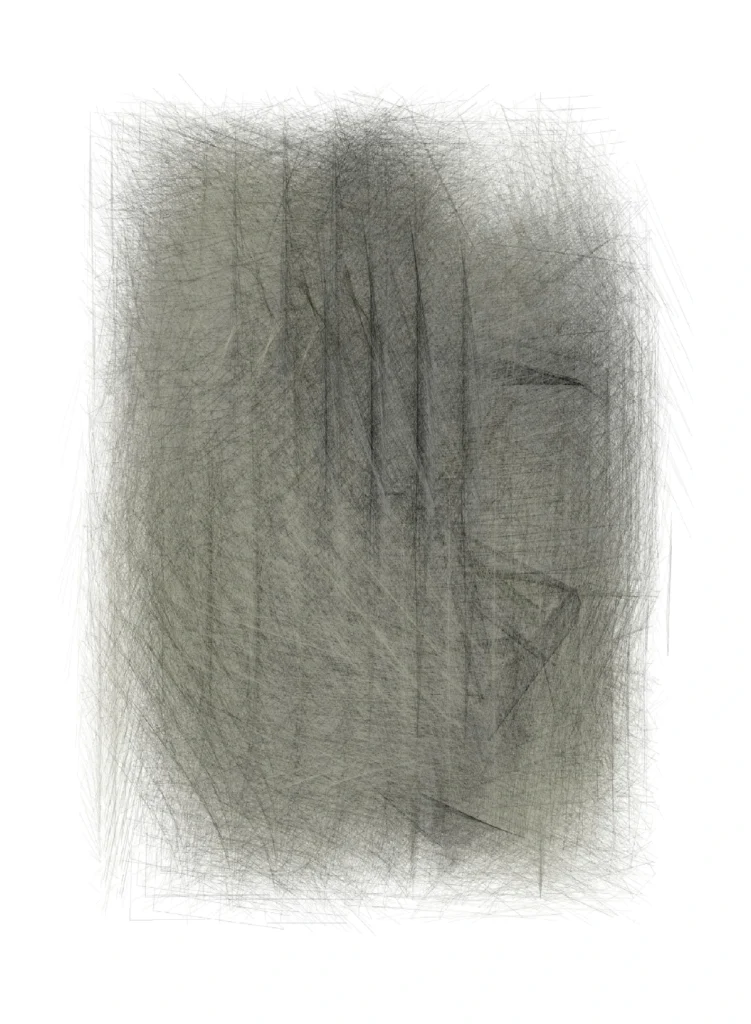
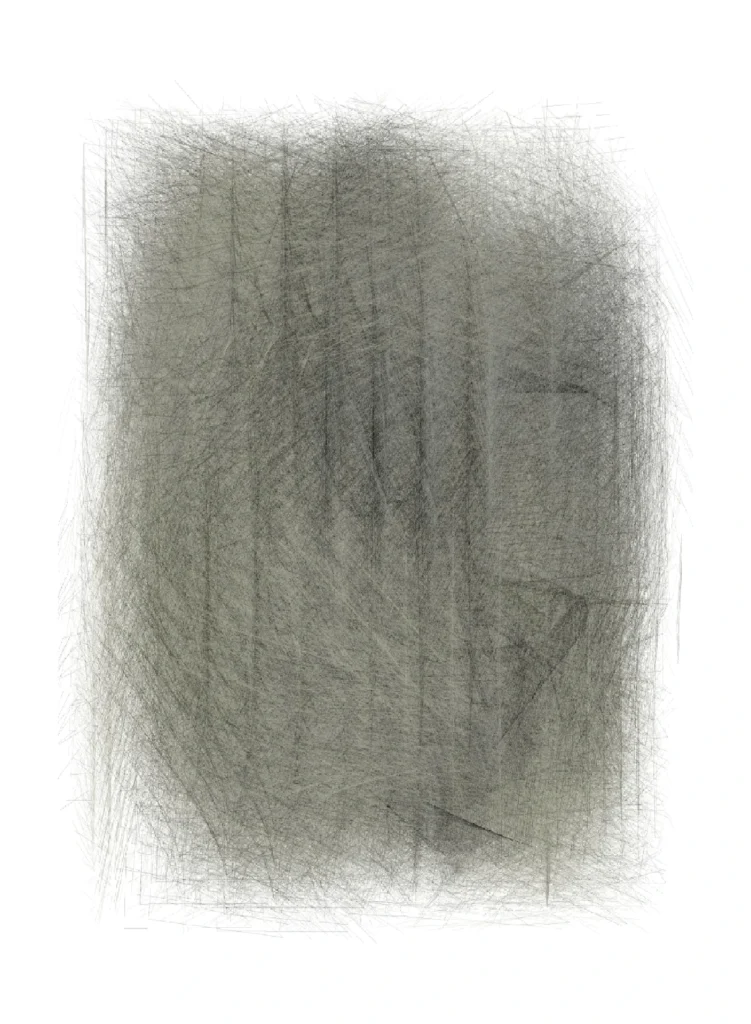
The works gathered under Signs of Artificial Life constitute an initial formulation of a generative practice conceived at the intersection of art, science, and technology. Rather than illustrating scientific concepts or visualizing technological processes, the series emerged from an attempt to synthesize these domains into a single working method—one in which computational systems function not as instruments of depiction, but as environments in which complex behavior can unfold and be observed.
A key point of reference for this approach was Casey Reas’ Process Compendium. Reas’ articulation of process as the primary artistic material—where simple instructions give rise too complex visual behavior—provided a model for how generative systems might operate autonomously while remaining conceptually rigorous. In particular, the Process Compendium situates generative art within a discourse that includes artificial life, explicitly referencing Craig Reynolds’ Boids as an example of how lifelike behavior can emerge from the interaction of minimal rules. This framing informed the ambition of Signs of Artificial Life: not to simulate living systems directly, but to create conditions under which life-adjacent qualities might appear.
Within this formulation, artistic agency is redistributed rather than relinquished. The software environment is designed through parameters, constraints, and rule sets that shape behavior without prescribing outcomes. I can influence the tendencies of the system—its densities, directions, and rates of accumulation—but any specific configuration cannot be determined in advance. What ultimately appears is neither random nor conventionally authored. Each image is the record of an encounter between an intentional framework and a computational process unfolding over time.
The generative component is essential. It is what allows emergence to be engaged visually rather than merely described conceptually. As in natural systems, complexity arises here through iteration, feedback, and accumulation rather than through compositional assembly. The resulting images are events: layered traces of activity whose internal structure reflects the history of their own making.
The term “signs” is deliberate. These works do not claim to represent artificial organisms, nor do they model specific biological processes. Instead, they function as indices—evidence that a system has crossed a threshold from strict determinism into behavior that appears contingent, adaptive, or self-organizing. Repetition with variation, localized order within global instability, and the suggestion of growth, sedimentation, or decay serve as cues through which something life-adjacent becomes perceptible without being explicitly named.
Alongside generative art and artificial life discourse, the visual and atmospheric qualities of the series were shaped by an affinity with East Asian ink brush painting. Traditional ink painting constructs form through accumulation, variation, and restraint rather than outline and description; atmosphere emerges from density, and empty space functions as an active component of the image. Signs of Artificial Life adopts an analogous logic—a limited palette, a restrained mark vocabulary, and an emphasis on suggestion over declaration—aiming for a reflective, meditative atmosphere in which form hovers between presence and dissolution.
Crucially, the images produced by the system are not treated as finished works. The generative image is a foundational component within a broader working process that already takes shape in Signs. Custom software operationalizes emergence as a visual process through interacting components that move within a shared environment, generating lines that accumulate over time. While the artist can influence tendencies and parameters, specific outcomes cannot be predicted in advance. The system operates continuously, unfolding as an abstract animation rather than converging on a predetermined endpoint. Through sustained observation, adjustment, and iteration, moments of meaningful accumulation are identified and sampled as still images. These moments are curated—some runs yield multiple viable images, others none—and selected images are carried forward as the generative substrate of a final work.
From this point, the process shifts registers. Selected images are materially developed through printing and subsequent manual intervention using encaustic, graphite, and oil paint. This stage introduces a slower, tactile temporality that responds to what has already emerged rather than prescribing it, emphasizing, obscuring, or redirecting elements within the image. Careful matting and framing then stabilize the work as a discrete object. What ultimately constitutes the artwork is not the generative output alone, but the composite result of computational emergence, curatorial selection, material engagement, and presentation. In this sense, Signs of Artificial Life establishes both the generative capability and the logic by which its products become works—an initial formulation that precedes and enables later series.
The distinction between this series and later bodies of work is not categorical or technical but intuitive. Signs of Artificial Life represents the first moment in which these concerns cohered into a stable process—a conceptual spine that subsequent series would extend, mutate, or complicate, while remaining evolutionarily linked to this initial formulation.
Seen in this light, Signs of Artificial Life functions as both origin and proposition. It proposes that artificial life need not be simulated in order to be meaningfully engaged, and that computation can serve as a medium through which emergence becomes perceptible rather than illustrative. The images stand as early evidence of a practice oriented toward discovery, atmosphere, and process—toward systems that behave in excess of intention while remaining carefully, deliberately conceived.